A community news update by Rappahannock-Rapidan Community Services Board dba Encompass Community Supports.

Hospitals Need Medicaid

People in small towns and rural areas depend on Medicaid for healthcare. If the government reduces Medicaid funding, it could put these communities and their hospitals at serious risk.

Any substantial cut to Medicaid will impact hospitals.  Many rural hospitals already struggle financially; Medicaid helps keep them open. If funding is cut, hospitals could face financial stress, reduce services, or even close.

Did you know that, in 2023:

  • Medicaid paid for about one fifth (19%) of ALL hospital spending. Medicare covered 25%, and private insurance covered 37%.
  • About one-third (32%) of all Medicaid spending went to hospital care.
  • Medicaid covered around 40% of all births in the U.S. and nearly half of births in rural areas.  Childbirth is the most common reason for inpatient hospital stays.
  • Expanding Medicaid under the Affordable Care Act (ACA) has helped prevent hospital closures.

Medicaid cuts can make it harder to get care. Fewer doctors, longer wait times, and the loss of key services—like maternity care, mental health support, and emergency treatment—could force rural residents to travel for medical help. This is especially dangerous for people with chronic illnesses like diabetes, heart disease, and cancer.

Hospitals are legally required to treat and stabilize all patients, even if they can’t pay.  Medicaid provides hospitals with funding to help cover these costs.  Without it, hospitals still have to treat people, but with less money.  Hospitals that stay open could be forced to reduce services, leading to fewer staff and longer wait times.  This affects everyone in the community—not just Medicaid patients.

There are economic impacts too.  Hospitals are often among the largest employers in rural areas. When they close or cut staff, it affects not just healthcare workers but also local businesses that rely on hospital employees and patients.

Medicaid funding is critical to keeping rural hospitals running and ensuring people get the care they need. Protecting it helps both hospitals and communities stay strong.

Voice your support for Medicaid by:

Want to receive our messages via email?
Click here to subscribe and get future updates delivered straight to your inbox!

A community news update by Rappahannock-Rapidan Community Services Board dba Encompass Community Supports.

Medicaid Matters to Older Adults

Last Friday, a government shutdown was avoided when Congress passed a short-term funding bill. This keeps the government running through September 30, 2025, with most funding staying the same.

Now, Congress has to determine:

  1. Reconciliation – The House and Senate must agree on a budget plan. Medicaid cuts have been proposed, but nothing is final yet. You can still speak up.
  2. Fiscal Year 2026 (FY26) Appropriations – This decides how the government will spend money on programs and services from October 1, 2025, to September 30, 2026.

Medicaid matters for older adults.  Many people think Medicare covers all healthcare for those over 65, but it doesn’t. Medicaid helps fill the gaps, paying for things like:

  • Nursing home care
  • In home care and community services
  • Premiums, deductibles, and co-pays

A nursing home costs about $108,000 per year—far too expensive for many. That’s why 2 out of 3 nursing home residents rely on Medicaid. Medicaid also funds in-home care, helping seniors stay at home and avoid costly hospital visits or nursing facilities. By working alongside Medicare, Medicaid ensures seniors get the care they need while improving their quality of life and financial security. It also supports caregivers by offering respite care, giving them a much-needed break. 

Did you know?

  • 1 in 4 Medicaid enrollees are age 65 or older or have a disability
  • More than half of Medicaid’s budget is spent on those over 65 and people with disabilities
  • Older adults make up 26% of Medicaid enrollees, but use 42% of the funding
  • Medicare does not cover long-term care

The Older Americans Act (OOA) helps too.  The OOA provides funding for services that help older adults, such as meal programs, caregiver support, and transportation.  So far, there are no specific proposals to cut OOA funding.  But Medicaid and OOA work together; OOA often fills gaps for those that do not qualify for Medicaid.  If Medicaid is cut, OOA programs would be overwhelmed with an increase in need with no new resources to meet that demand.

Cuts to Medicaid mean fewer services for older adults who need help. Contact your representative today.

A community news update by Rappahannock-Rapidan Community Services Board dba Encompass Community Supports.

Medicare and Medicaid

The U.S. government, like a household, has to figure out how to raise money and how to spend it. The government mainly gets its money from taxes and borrowing.  The taxes come from various sources, such as income, payroll, and corporate taxes. If the government doesn’t have enough money from taxes, it borrows by issuing Treasury securities. Then, the government funds various departments and programs.

The process leads to a lot of debate about taxes, how the money is spent, and the national debt.

The current House resolution wants to cut $4.5 trillion in taxes, mostly for the wealthy and corporations. At the same time, it wants to spend more money on things like immigration ($100 billion), Homeland Security ($90 billion), and the military ($100 billion). To make this work in the short term, the plan would raise the debt ceiling by $4 trillion.

The plan to balance the tax cuts includes cutting $2 trillion in spending. This includes cutting $880 billion over 10 years from the part of the budget that covers Medicare and Medicaid, and $230 billion from the part of the budget that covers the Supplemental Nutrition Assistance Program (SNAP), formally known as food stamps.

If approved, Virginia would face:

  • $2.7 billion less for Medicaid (a 14% cut)
  • $900 million less for public university students (Loans and Pell Grants)
  • $273 million less for nutrition programs (a 15% cut to SNAP and Child Nutrition programs)

In addition, if this plan is approved, the federal budget deficit would increase by $173 billion in FY 2026. The spending cuts aren’t enough to cover the proposed tax cuts.

ECS advocates for a budget that supports and cares for all, and helps everyone access the resources they need to live healthy, secure, and fulfilling lives. It’s important that the U.S. budget reflect the needs of everyone, especially vulnerable groups like children, older adults, low-income families, and those with disabilities. A fair budget helps ensure access to essentials like healthcare, education, affordable housing, and nutrition.

Now is the time to speak up.  Congressional leadership, the House and Senate, need to work together to decide on a budget.

You can make a difference by:

Everyone deserves a chance to succeed and contribute to society, and a well-crafted budget can make that possible for all.

A community news update by Rappahannock-Rapidan Community Services Board dba Encompass Community Supports.

Invest in Public Health, Support Medicaid

Public health is what we do as a society to create a community in which everyone has the opportunity to be healthy.  It is the science and art of preventing disease and promoting health. It is the organized community activities that we undertake to identify or prevent threats to the health of the community, including services, programs, and policy development.

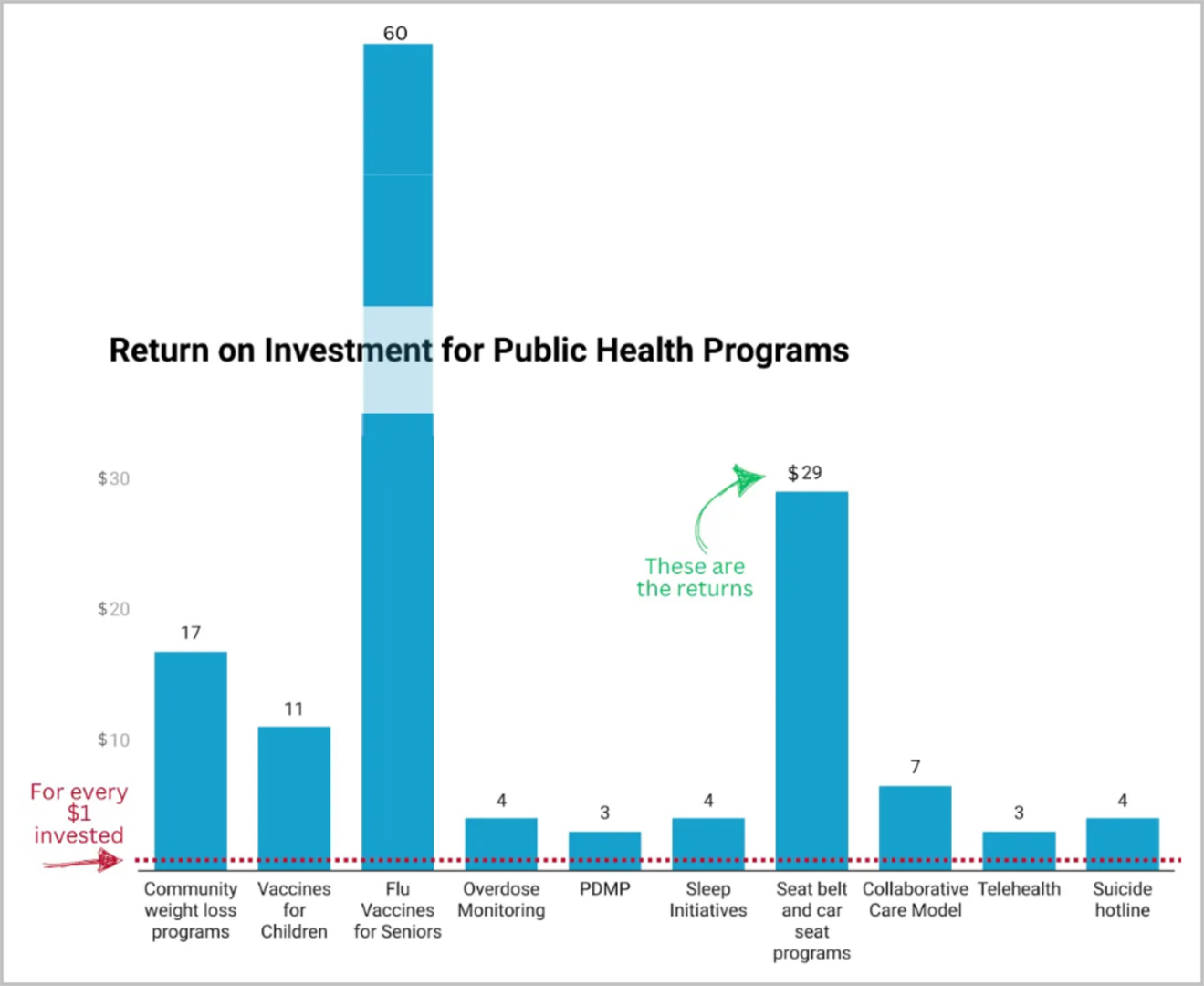
Public health is an investment.  Did you know investing $1 in mental health collaborative care returns $6.50 in healthcare savings and improved worker productivity?

Here are more examples:


Invest in Public Health, Support Medicaid

Virginia’s Medicaid offers comprehensive coverage. It includes primary care, specialty care, behavioral health and dental. A public health program, Medicaid aims to improve the overall health and well-being of the population, particularly vulnerable groups. Medicaid works to improve individual care and the health of entire communities. By reducing barriers to healthcare, Medicaid helps address health disparities, including those related to socioeconomic status, race, and geography.

You can make a difference. Voice your support for Medicaid by:

Medicaid is a vital part of the public health infrastructure because it ensures that all individuals, regardless of their financial situation, have the opportunity to live healthier lives.

A community news update by Rappahannock-Rapidan Community Services Board dba Encompass Community Supports.

Medicaid at Risk Message

On February 25th, the House of Representatives passed a budget plan that suggests cutting $880 billion from programs under the Energy & Commerce Committee, with Medicaid being the largest program at risk.

Medicaid is a public health insurance program that provides health coverage to eligible low-income adults, working families, children, vulnerable seniors, and people with disabilities. About 1 in 5 people in the U.S. rely on Medicaid for health coverage.

Virginia expanded Medicaid in 2018 to cover more residents.  The federal government pays 90% of the expansion cost, and Virginia covers the remaining 10%. Virginia also passed a “trigger law” with this expansion. This means if the federal government gives less than 90%, Medicaid expansion will end.

Medicaid keeps people healthy at all ages and stages.  2 out of 5 births in the U.S. are paid for with Medicaid, it provides coverage to 2 in 5 children and almost 3 in 5 nursing facility residents.  Medicaid covers custodial nursing home care; Medicare does not.

Medicaid is the largest source of funding for mental health and substance use disorder treatment.  As your local Community Services Board, Encompass Community Supports (ECS) is the single point of entry into publicly funded mental health, intellectual and developmental disability, and substance use disorder services.  If Medicaid funding is cut, people will lose access to care.

Non-elderly adults and children in rural areas are more likely than those living in metro areas to rely on Medicaid for their health insurance.  In Rappahannock County, 34.1% of children are covered by Medicaid compared to 30% of children in Virginia.  31.9% of children in Culpeper use Medicaid for healthcare.

Cuts to Medicaid will also hurt state budgets, reduce jobs at local service providers, and increase costs from more emergency room visits and unpaid care.

Now is the time to speak up.  Congressional leadership, the House and Senate, need to work together to decide on a budget.   You can make a difference.  You can help protect Medicaid by:

Your voice matters—action today can help protect Medicaid and ensure vital healthcare for those who need it most.

A community news update by Rappahannock-Rapidan Community Services Board dba Encompass Community Supports.

Keeping an eye on what comes

Encompass Community Supports (ECS), formally known as Rappahannock-Rapidan Community Services, will continue to review the incoming executive orders and assess their potential impact on our organization.  We understand that you have many questions; we do too.

It will take time to review and understand the changes.  Our goal is to give clear and accurate information to our residents, clients, and staff. Thank you for being so patient.

What will not change is ECS’ unwavering commitment to improving the quality of life in Culpeper, Fauquier, Madison, Orange, and Rappahannock Counties by providing comprehensive mental health, substance use, developmental disability, housing, children’s, aging, case management, and transportation services.  We will continue to support and value every member of our community.

We’ll make sure to keep you updated as the situation evolves.

A community news update by Rappahannock-Rapidan Community Services Board dba Encompass Community Supports.

Memorandum M-25-13

The executive order,  Office of Management and Budget (OMB) Memorandum M-25-13, has been paused. A review of federal funding will move forward but funding will not be frozen during the review period.

Encompass Community Supports (ECS), formally known as Rappahannock-Rapidan Community Services, is a non-profit organization funded by federal, state, and local governments.

We work to improve the quality of life in Culpeper, Fauquier, Madison, Orange, and Rappahannock Counties by providing comprehensive mental health, substance use, developmental disability, housing, children’s, aging, case management, and transportation services.  We want to help people live healthier, happier lives in their communities.

On Monday, January 27th, the President signed an executive order to temporarily pause federal spending, effective at 5:00 pm to ensure alignment with Presidential priorities.  A federal judge in D.C has temporarily blocked the order until next Monday.

While many people think of federal grants for research or science, they also support important community services.  Many ECS services are grant funded, including Meals on Wheels, housing assistance, prevention programs and more.  We are currently monitoring the situation and reviewing how the order might impact our organization.

Just like you, we have many questions.  But ECS is a strong, resilient organization that is committed to connecting people with the resources they need, whether it’s counseling, prevention programs, or crisis intervention. We want to build a stronger, healthier community by helping people access care, reducing stigma, and empowering individuals to live fulfilling lives. We will keep you updated as the situation evolves.